
On a rocky hill above the city of Shkodër, Rozafa Castle commands one of Albania’s most dramatic positions. Three rivers—the Buna, the Drin, and the Kir—converge at its base, while the fortress walls rise 130 metres above sea level. For more than two millennia this stronghold has witnessed empires rise and fall. Today it draws visitors as one of the country’s most popular historical sites.
Plan your visit to Rozafa Castle
Sat 09:00–16:00
Sun 09:00–20:00
Location of Rozafa Castle
Rozafa Castle sits about three kilometres southwest of central Shkodër in northwestern Albania. The fortress occupies a strategic hilltop at the entrance to the city. Visitors can walk from the city centre in roughly thirty minutes along Rruga Rozafa, though the final approach involves a steep climb up stone paths. Taxis cover the distance in under five minutes. The castle’s elevated position offers sweeping views across Lake Shkodër to Montenegro in the distance. You can also see the surrounding plain where the rivers meet. The site forms part of an Archaeological Park of Albania, so the surrounding landscape remains largely undeveloped.
History of Rozafa Castle
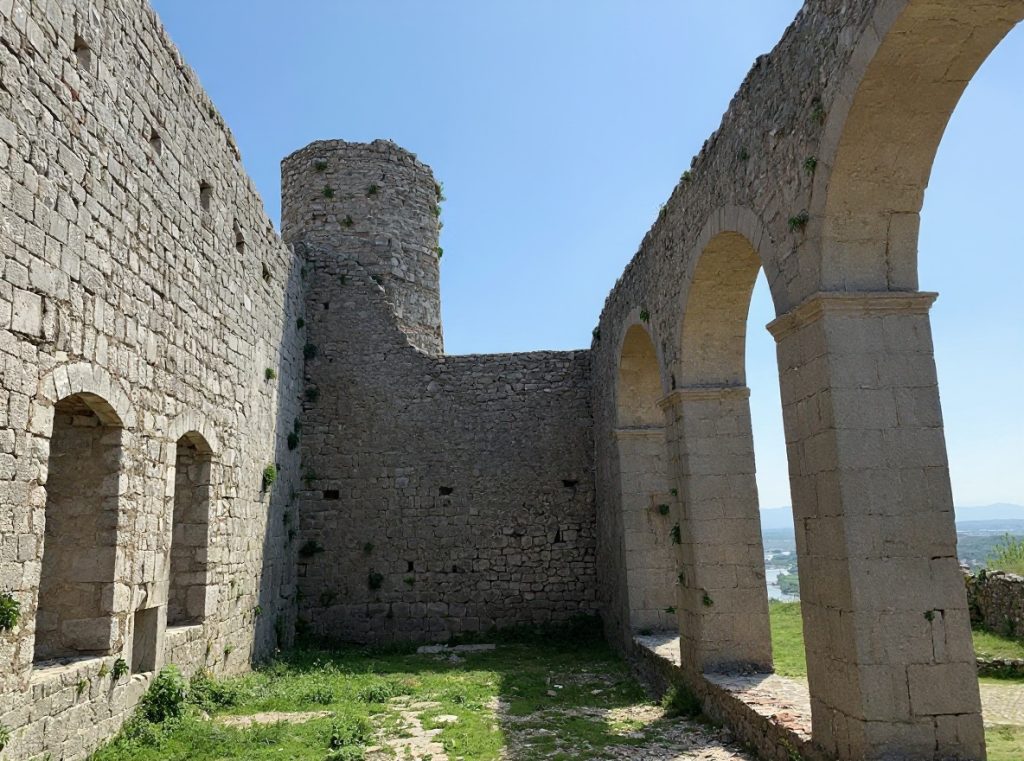
Archaeological evidence shows that people settled this hill during the Bronze Age. The Illyrians established fortifications here in the fourth century BC, when the Labeates tribe built the citadel. The fortress served as the capital of the Illyrian king Gentius, who resisted Roman conquest until his defeat in 168 BC. Massive cyclopean walls from this period still survive between the first two gates. After the Romans conquered the fortress in the second century BC, they reinforced the walls and improved the infrastructure. The castle then passed to Byzantine control as political power shifted eastward.
During the medieval period the fortress changed hands repeatedly. The feudal Balshaj family gave the castle much of its current form during the fourteenth century. The Venetians later took control and made significant architectural contributions. They rebuilt the ruined fortress and constructed the impressive gateway and St. Stephen’s Cathedral. The Ottomans laid siege to Rozafa during the First Ottoman-Venetian War. The bloody siege started in May 1478 and ended with a peace agreement in April 1479, when Rozafa fell to the Ottomans. They built the Fatih Sultan Mehmet Mosque in 1479 over the remains of St. Stephen’s Cathedral.
The castle endured further conflict in later centuries. The fortress remained in Ottoman hands until 1913, when they surrendered after the Siege of Scutari, a six-month siege by the Balkan League. In the twentieth century the castle witnessed conflicts during the Balkan Wars and World War II, which left some sections in ruins. The castle carries a powerful Albanian legend about sacrifice and loyalty. According to folklore, three brothers struggled to build the walls because they crumbled each night. So they walled the youngest brother’s wife, Rozafa, into the foundations to ensure the structure would endure.
Current status
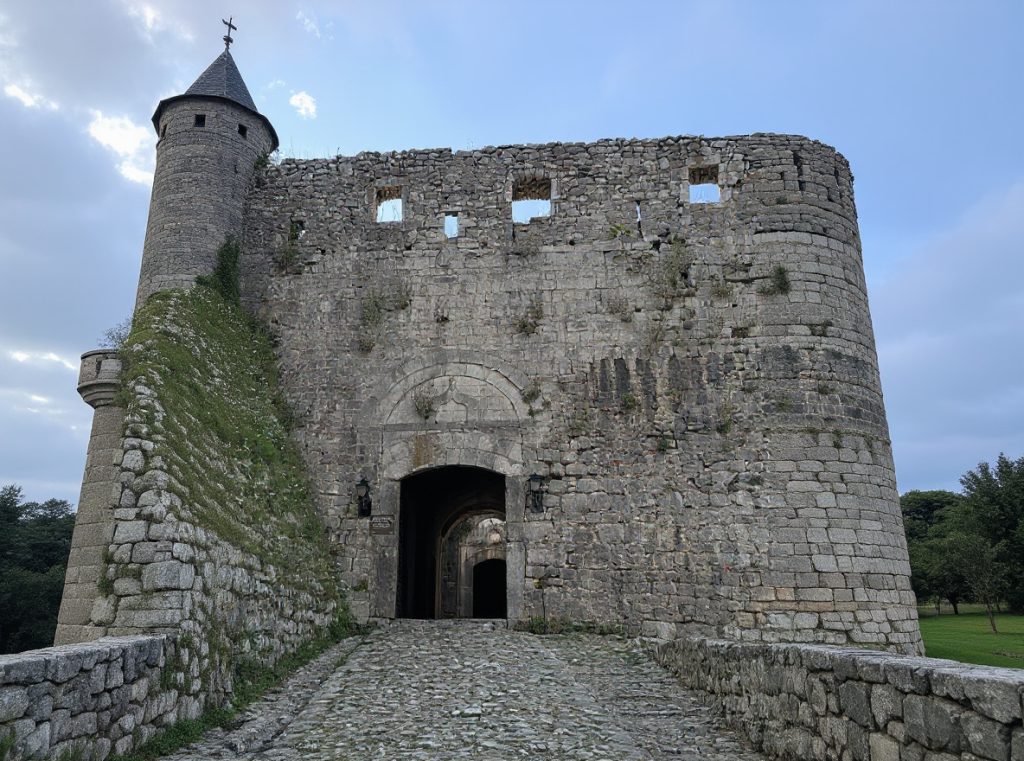
Albania owns the castle and opens it to the public. The ticket office operates under DRTK Shkodër, the Regional Directorate of Cultural Heritage. Visitors pay an admission fee at the gate. What we see of the castle today reflects mainly Venetian construction, and the castle has three baileys. Once you enter the fortified fifteenth-century main entrance, you come to a first courtyard. Here you will find the fourth-century tract of the Illyrian wall, the oldest structure in the castle grounds. In the second courtyard stand the ruins of the church that the Ottomans converted to a mosque. The third courtyard holds a three-storey Venetian building known as the “Capitol”. This building served as the residence of the Venetian ruler. Inside, the Castle of Shkodra Museum tells of the 4,000-year-old castle.
The castle draws visitors for its historical significance and its panoramic vistas. From the ramparts you can see the city of Shkodër spread below, the rivers winding through the landscape. You can also spot the peaks of the Albanian Alps on the horizon. The site remains peaceful and atmospheric, with extensive ruins to explore. The legend of Rozafa continues to resonate in Albanian culture, so the fortress functions as both monument and symbol.
Castles near Rozafa Castle
Frequently asked questions
What is the legend of Rozafa Castle?
According to local folklore, a young woman named Rozafa was immured alive in the castle walls to ensure the fortress would stand. She requested that her right eye, hand, foot and breast remain exposed so she could see, caress, rock and feed her infant son.
How much does it cost to visit Rozafa Castle?
Entry to Rozafa Castle is 400 lek for adults, 120 lek for students aged 12–18, and free for children under 12. The small museum inside the castle requires a separate ticket of 200 lek for adults.
What are the views like from Rozafa Castle?
The castle sits at the confluence of three rivers—the Buna, Drin and Kir—and offers panoramic views across Shkodër, Lake Shkodër and the Albanian Alps. The strategic hilltop position has made it significant since Illyrian times.
Can I reach Rozafa Castle by public transport from Shkodër?
Yes, local buses on the Bahçallëk–Fermentim route run from central Shkodër and drop passengers near the castle turn-off for 40 lek. From the bus stop, it's a 10–15 minute uphill walk on a cobblestone path to the entrance.
What historical periods are represented at Rozafa Castle?
The castle has Illyrian foundations dating back over 2,000 years. It was later controlled by the Romans, Byzantines, Venetians and Ottomans, with most of the surviving fortifications being Venetian in design from the medieval period.
Featured listings