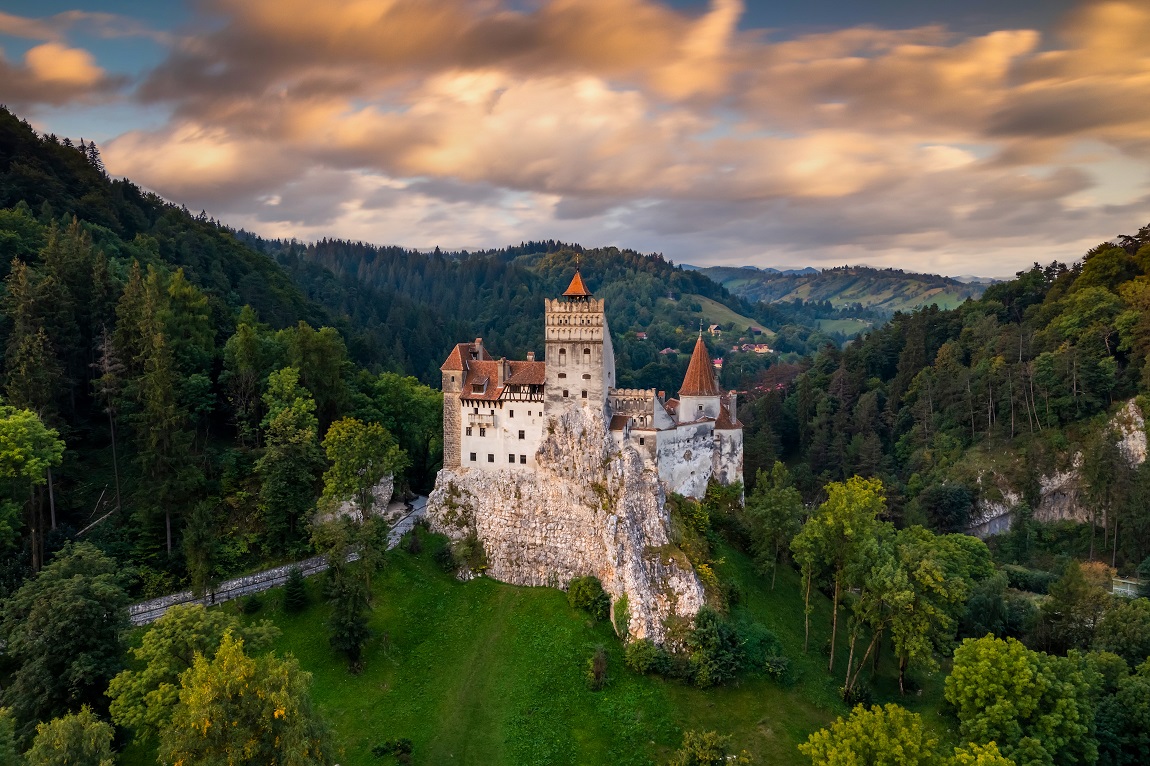

Perched on a rocky spur at 365 metres above sea level, Clervaux Castle commands the northern Luxembourg skyline with its medieval towers and fortified walls. The River Clerve loops around the castle on three sides, creating a natural moat that once made this fortress nearly impregnable. The first written record of the castle dates to 1126, when it served as both administrative centre and defensive stronghold. Today, the castle holds three significant museums, including the UNESCO-listed Family of Man photographic exhibition, drawing visitors from across Europe.
Location of Clervaux Castle
Clervaux Castle sits in the town of Clervaux in northern Luxembourg, within the Oesling region known for its forested hills and valleys. The fortress occupies a dramatic position on a rocky outcrop that rises sharply above the town centre. Luxembourg City lies approximately 1.5 hours away by car or train. CFL operates regular rail connections that bring visitors to Clervaux station. From the station, a 15-minute walk through the historic town leads to the castle entrance at Montée du Château. The castle stands close to where Belgium, Germany and Luxembourg meet, so day trips from neighbouring countries work well. Parking is available near the castle, though the steep approach rewards those who arrive on foot with views across the valley.
History of Clervaux Castle
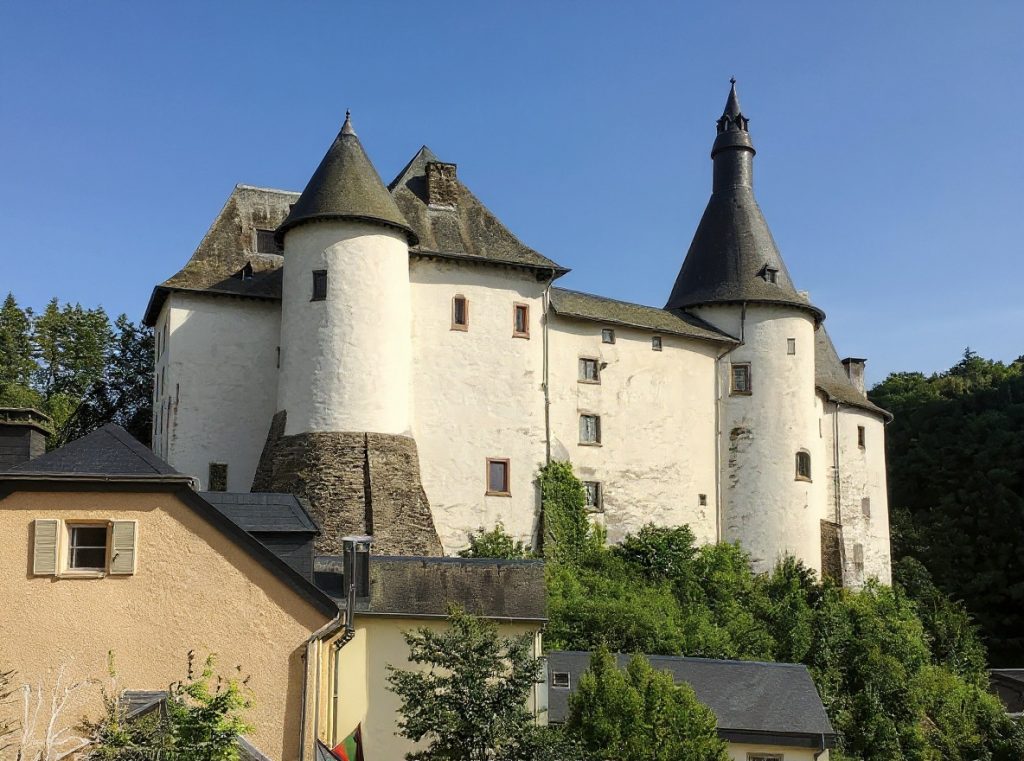
Gerard I of Sponheim founded the castle in the early 12th century, establishing what would become one of Luxembourg’s most important fortresses. Gerard, brother of the Count of Vianden, built the oldest parts including the west wing as a protective administrative centre. Ownership passed through several noble families: the Meysenburgs, the Counts of Vianden, and then the Brandenburg family in the early 15th century. The large palace and rounded towers date from around 1400 when the prosperous Lords of Brandenburg lived there. The de Lannoy family held the castle for nearly 240 years, making substantial additions in the 17th century.
In 1634, Claude of Lannoy built reception halls including the large Knights’ Hall in the Spanish style of Flanders. Workers added stables, storerooms and administrative buildings in 1660, with new stables following in the 18th century. In 1887, the owner tore down the bailey on the southeast side and used its stones to build a new house in a nearby park. By 1927, the castle had entered private bourgeois ownership and became a hotel and museum.
On December 17th 1944 during the Battle of the Bulge, German forces shelled the castle during fierce fighting for Clervaux. The bombardment caused a fire that destroyed much of the structure, leaving it in ruins. After World War II, the Luxembourg government purchased the castle and undertook comprehensive restoration completed in 1994, carefully rebuilding its historic form.
Current status
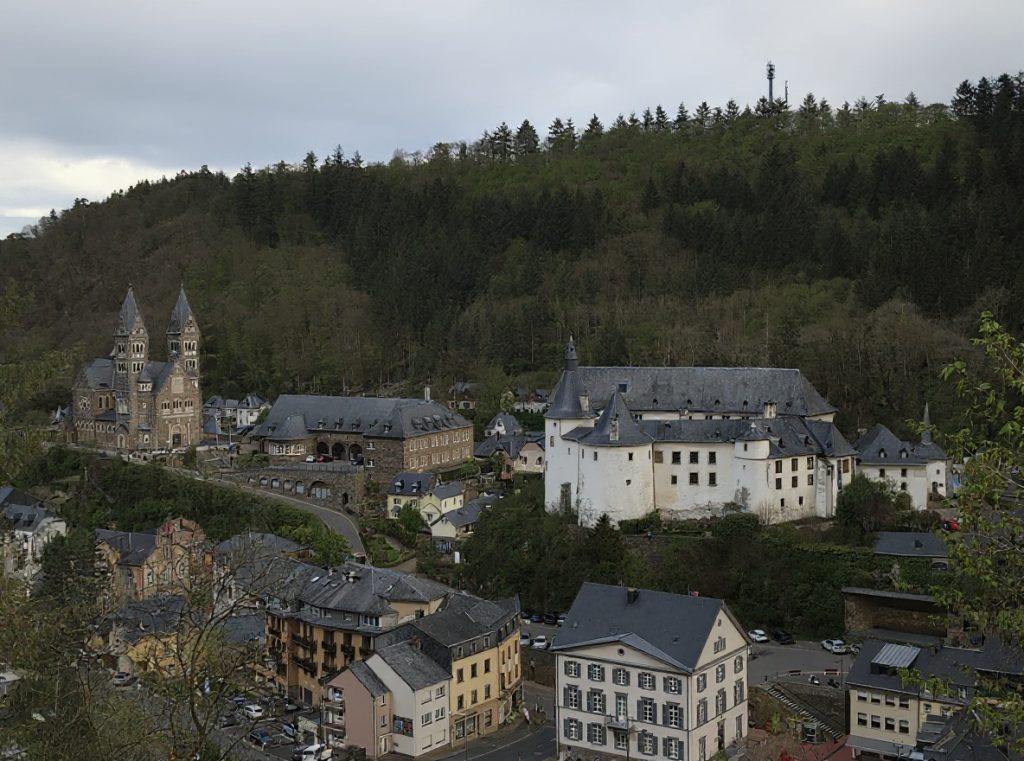
The castle now houses the commune’s administrative offices as well as museum spaces, serving both civic and cultural functions. Since the 1970s, the castle has been home to various institutions. The Museum of the Battle of the Bulge opened in 1974. The south wing houses an exhibition of models of Luxembourg’s castles, while the old kitchen contains a museum devoted to the Battle of the Ardennes. A Sherman tank that participated in the Battle of Clervaux in 1944 and a German 88 anti-aircraft field gun stand on display at the castle entrance.
The upper floors house the permanent installation of 503 original and restored prints by 273 photographers from the exhibition The Family of Man. Edward Steichen curated it for the Museum of Modern Art in 1955. Edward Steichen was born in Luxembourg in 1879, in Bivange. The castle first presented the exhibition in 1994 after restoration of the prints. Before finding its permanent home in Clervaux, it toured the world, where nine million visitors saw it. UNESCO inscribed the exhibition on the Memory of the World Register, celebrating human unity through photography from 68 countries.
The castle opens Wednesday to Sunday from 12:00 to 18:00. Guides offer tours on Sunday afternoons. Visitors explore the medieval courtyards and climb the towers for views across the Clerve valley. They also discover the interplay of Gothic and Renaissance architecture. The fortress combines its restored medieval character with its modern role as cultural centre, where history lives through exhibitions. These exhibitions connect Luxembourg’s wartime sacrifice with universal human stories. Red sandstone walls rise above the town, inviting discovery of a castle reborn from destruction.
Featured listings