
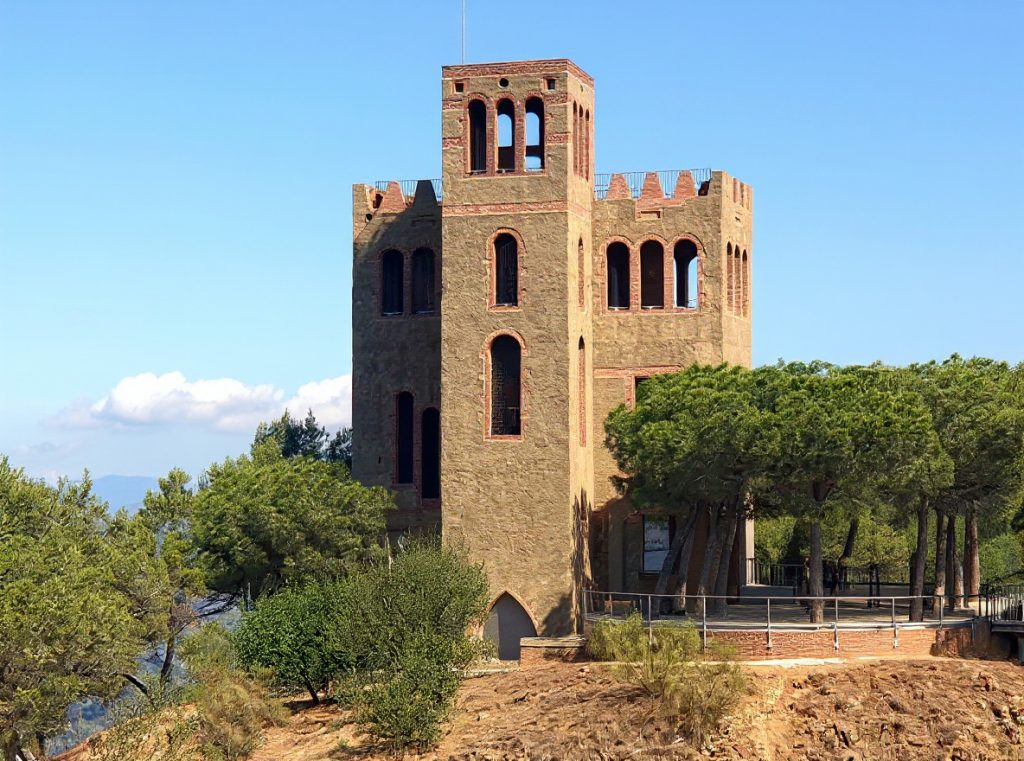
Perched high on the Collserola range, the Castell de Torre Baró commands sweeping views over Barcelona’s northern districts. Builders raised this striking structure around 1904. It surprises visitors with its medieval appearance, though it dates from the early 20th century rather than the Middle Ages. The building features a dash of Mudéjar architecture. Developers originally conceived it as part of an ambitious hotel and urban development scheme. Today it stands as one of Nou Barris’ most recognisable landmarks. The castle now serves as an environmental education centre for the Serra de Collserola Natural Park.
Location of Castell de Torre Baró
The castle stands between the Roquetes and Torre Baró neighbourhoods in Barcelona’s Nou Barris district. It sits on one of the crest lines of the Collserola hills, a strategic location that makes it visible from much of the northeastern sector. The address is Carretera Alta de les Roquetes, 309-311, in postal code 08033. Visitors can reach the site when they take bus 82 to stop 3110 on Carretera Alta de les Roquetes. The Torre Baró-Vallbona metro station on Line 11 provides another access point, though a walk up the hill follows. From this elevated position, the castle offers views over Nou Barris, Horta, Sant Andreu, Sant Martí and the River Besòs beyond. The panorama also includes the foothills of Collserola, with the towns of Santa Coloma, Sant Adrià and Badalona. The structure occupies a prominent viewpoint where the mountains meet the urban sprawl below.
History of Castell de Torre Baró
The name “Torre Baró” comes from another tower that no longer exists. That tower stood on the site of the metro station. It was a mansion that belonged to Baron Pinós, the Baró de Pinós in Catalan, until troops destroyed it in 1714 during the War of the Spanish Succession. The first reference to Torre Baró dates from 1339, when Guillern of Argentona owned it. In 1714, the Bourbon troops demolished the tower after Baron Bernat de Planós acquired it. Builders erected a second tower in 1797. Despite appearing in the city council’s inventory of historical buildings, workers demolished this tower in 1968 so Avinguda Meridiana could extend. In the late 19th century, the Sivatte family purchased the Torre Baró lands, including the mountains of Les Roquetes. The current structure emerged from this ownership. Some believe that Manuel Sivatte i Llopart constructed the building as a place where his sick daughter could rest and enjoy the beneficial climate here. She died before builders completed the works, so they left the building unfinished. According to others, however, the Compañia Urbanizadora de las alturas del noroeste de Horta set the project in motion. Manuel Sivatte was a member of the board of directors of this development company. The aim of the project was to develop the area of Les Roquetes or the Sierra de los Pinares. The company also planned to build a hotel at the centre of the future development. This hotel became known as Torre Baró or Torre d’en Sivatte. The original construction was never completed and has been a ruin since its inception. The military used it for purposes during the civil war.
Current status
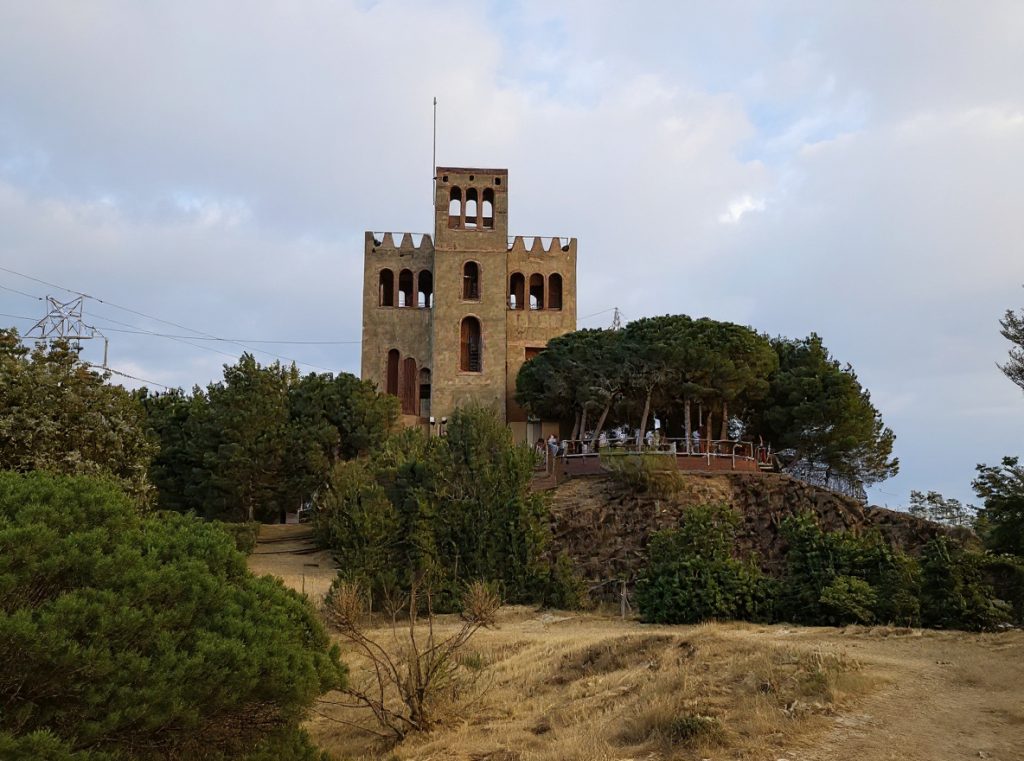
In 1989, workers restored it. Barcelona City Council declared it a historical heritage site, and builders constructed a magnificent viewpoint around it. The late 1980s consolidation work addressed structural problems while builders created a viewpoint above Barcelona at its feet. Today it functions as a Parc de Collserola environmental education and information point. Barcelona City Council manages the facility through the Parc Natural de Collserola. The centre offers guided tours of the castle, itineraries for discovering the surrounding area and education workshops for all ages. Tours explore the building’s evolution from its early 20th-century origins through its periods of abandonment and restoration. The ground floor houses an exhibition space dedicated to historical interpretation. An aula ambiental (environmental classroom) serves school groups and families. Visitors can climb to the upper levels via a spiral staircase that workers installed during the 1980s renovation. Safety improvements now secure the openings. The hilltop setting provides one of Barcelona’s finest panoramic viewpoints, where city and mountain meet in a landscape that stretches from the densely packed neighbourhoods below to the green ridges of the Collserola range above.
Featured listings