<?xml version="1.0" encoding="UTF-8"?><rss version="2.0"
	xmlns:content="http://purl.org/rss/1.0/modules/content/"
	xmlns:wfw="http://wellformedweb.org/CommentAPI/"
	xmlns:dc="http://purl.org/dc/elements/1.1/"
	xmlns:atom="http://www.w3.org/2005/Atom"
	xmlns:sy="http://purl.org/rss/1.0/modules/syndication/"
	xmlns:slash="http://purl.org/rss/1.0/modules/slash/"
	>

<channel>
	<title>Famous persons Archives - Europe&#039;s Castles</title>
	<atom:link href="https://europescastles.com/category/famous-persons/feed/" rel="self" type="application/rss+xml" />
	<link>https://europescastles.com/category/famous-persons/</link>
	<description>Explore the timeless majesty of Europe&#039;s castles</description>
	<lastBuildDate>Sun, 22 Dec 2024 18:14:20 +0000</lastBuildDate>
	<language>en-US</language>
	<sy:updatePeriod>
	hourly	</sy:updatePeriod>
	<sy:updateFrequency>
	1	</sy:updateFrequency>
	<generator>https://wordpress.org/?v=6.9.4</generator>

<image>
	<url>https://europescastles.com/wp-content/uploads/2024/05/cropped-favicon-32x32.png</url>
	<title>Famous persons Archives - Europe&#039;s Castles</title>
	<link>https://europescastles.com/category/famous-persons/</link>
	<width>32</width>
	<height>32</height>
</image> 
	<item>
		<title>The legacy of Ivar the Boneless in European castles</title>
		<link>https://europescastles.com/famous-persons/the-legacy-of-ivar-the-boneless-in-european-castles/</link>
					<comments>https://europescastles.com/famous-persons/the-legacy-of-ivar-the-boneless-in-european-castles/#respond</comments>
		
		<dc:creator><![CDATA[europescastles]]></dc:creator>
		<pubDate>Sat, 09 Nov 2024 19:09:45 +0000</pubDate>
				<category><![CDATA[Famous persons]]></category>
		<category><![CDATA[Haunted]]></category>
		<category><![CDATA[ivar the boneless]]></category>
		<category><![CDATA[legacy]]></category>
		<guid isPermaLink="false">https://europescastles.com/?p=9760</guid>

					<description><![CDATA[<p>The figure of Ivar the Boneless has been one of historical intrigue and mystery. Associated with the Viking Age, Ivar the Boneless played a significant role in shaping the history of Europe. His legacy can be traced through numerous castles and fortresses across the continent. The stories and structures linked to Ivar provide a captivating [&#8230;]</p>
<p>The post <a href="https://europescastles.com/famous-persons/the-legacy-of-ivar-the-boneless-in-european-castles/">The legacy of Ivar the Boneless in European castles</a> appeared first on <a href="https://europescastles.com">Europe&#039;s Castles</a>.</p>
]]></description>
										<content:encoded><![CDATA[<p>The figure of Ivar the Boneless has been one of historical intrigue and mystery. Associated with the Viking Age, Ivar the Boneless played a significant role in shaping the history of Europe. His legacy can be traced through numerous castles and fortresses across the continent. The stories and structures linked to Ivar provide a captivating glimpse into the past, offering insights into the Viking era&#8217;s influence on European architecture and culture.</p>
<h2>Who was Ivar the Boneless?</h2>
<p>Ivar the Boneless, a legendary Viking leader, was one of the sons of Ragnar Lothbrok, a famed Norse hero. His nickname, &#8220;the Boneless,&#8221; has been subject to various interpretations, ranging from a condition that left him physically impaired to a reference to his flexibility and strategic prowess in battle. Despite the ambiguity surrounding his name, it is universally acknowledged that Ivar the Boneless was a formidable warrior and leader.</p>
<p><img fetchpriority="high" decoding="async" class="alignnone size-full wp-image-10108" src="https://europescastles.com/wp-content/uploads/2024/11/ivar-the-boneless-2.jpg" alt="" width="1600" height="900" srcset="https://europescastles.com/wp-content/uploads/2024/11/ivar-the-boneless-2.jpg 1600w, https://europescastles.com/wp-content/uploads/2024/11/ivar-the-boneless-2-300x169.jpg 300w, https://europescastles.com/wp-content/uploads/2024/11/ivar-the-boneless-2-1024x576.jpg 1024w, https://europescastles.com/wp-content/uploads/2024/11/ivar-the-boneless-2-768x432.jpg 768w, https://europescastles.com/wp-content/uploads/2024/11/ivar-the-boneless-2-1536x864.jpg 1536w" sizes="(max-width: 1600px) 100vw, 1600px" /></p>
<h2>Ivar the Boneless and his conquests</h2>
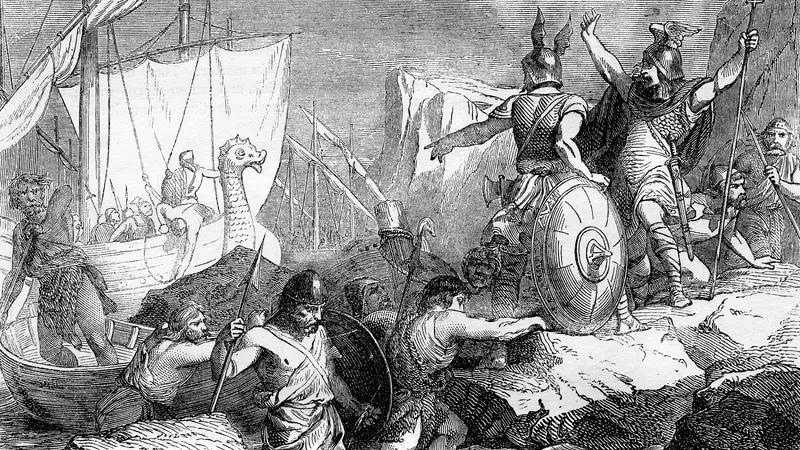
<p>During the 9th century, Ivar the Boneless led the Great Heathen Army in invasions across the British Isles. These invasions left a lasting impact on the regions, influencing the development and construction of numerous castles and fortresses. The strategic locations of these castles often coincided with sites of significant Viking activity, reflecting the Norsemen&#8217;s military acumen and their enduring legacy.</p>
<h2>Castles associated with Ivar the Boneless</h2>
<p>Several castles across Europe are linked, directly or indirectly, to the exploits of Ivar the Boneless. These castles serve as historical markers of Viking presence and influence.</p>
<h3>York Castle, England</h3>
<p>One of the most notable castles associated with Ivar the Boneless is <a href="https://europescastles.com/castle/york-castle/">York Castle</a>. York, known as Jorvik during the Viking Age, was captured by the Great Heathen Army in 866 AD under Ivar’s leadership. This conquest established a significant Viking presence in northern England. The remains of York Castle, including Clifford’s Tower, stand as a testament to this era of Viking dominance and integration.</p>
<p><img decoding="async" class="alignnone size-full wp-image-9903" src="https://europescastles.com/wp-content/uploads/2024/08/York-Castle-Cliffords-Tower-2.webp" alt="" width="1200" height="630" srcset="https://europescastles.com/wp-content/uploads/2024/08/York-Castle-Cliffords-Tower-2.webp 1200w, https://europescastles.com/wp-content/uploads/2024/08/York-Castle-Cliffords-Tower-2-300x158.webp 300w, https://europescastles.com/wp-content/uploads/2024/08/York-Castle-Cliffords-Tower-2-1024x538.webp 1024w, https://europescastles.com/wp-content/uploads/2024/08/York-Castle-Cliffords-Tower-2-768x403.webp 768w" sizes="(max-width: 1200px) 100vw, 1200px" /></p>
<h3>Nottingham Castle, England</h3>
<p>Another significant site is <a href="https://europescastles.com/castle/nottingham-castle/">Nottingham Castle</a>. In 868 AD, Ivar, alongside his brothers, captured Nottingham, solidifying the Vikings&#8217; control over the region. The site of Nottingham Castle has since seen numerous reconstructions, yet its historical significance remains deeply tied to the Viking Age and the strategic mind of Ivar.</p>
<p><img decoding="async" class="alignnone size-full wp-image-10102" src="https://europescastles.com/wp-content/uploads/2024/11/Nottingham-Castle.webp" alt="" width="1205" height="801" srcset="https://europescastles.com/wp-content/uploads/2024/11/Nottingham-Castle.webp 1205w, https://europescastles.com/wp-content/uploads/2024/11/Nottingham-Castle-300x199.webp 300w, https://europescastles.com/wp-content/uploads/2024/11/Nottingham-Castle-1024x681.webp 1024w, https://europescastles.com/wp-content/uploads/2024/11/Nottingham-Castle-768x511.webp 768w, https://europescastles.com/wp-content/uploads/2024/11/Nottingham-Castle-360x240.webp 360w, https://europescastles.com/wp-content/uploads/2024/11/Nottingham-Castle-720x480.webp 720w, https://europescastles.com/wp-content/uploads/2024/11/Nottingham-Castle-750x500.webp 750w" sizes="(max-width: 1205px) 100vw, 1205px" /></p>
<h3>Dublin, Ireland</h3>
<p>Although not a castle in the traditional sense, the fortified city of Dublin was established by the Vikings in 841 AD. Ivar and his kin were instrumental in its development as a prominent Norse settlement. The city&#8217;s fortifications and structures reflect the architectural and cultural impact of the Vikings, with Ivar’s influence evident in its early development.</p>
<h2>The architectural legacy</h2>
<p>Ivar the Boneless’s architectural legacy intertwines with the broader Viking influence on European castles. Viking fortifications often occupied strategic locations on elevated ground or near waterways, providing both defense and control over trade routes. The techniques and styles introduced by the Vikings influenced the construction of later medieval castles.</p>
<p>The motte-and-bailey design, for example, though prevalent in Norman architecture, bears similarities to earlier Viking fortifications. The use of wooden palisades, ditches, and earthworks were common features in Viking defensive structures, which were adapted and evolved in the construction of medieval castles.</p>
<h2>Viking influence on European culture</h2>
<p>The influence of Ivar the Boneless and his Viking compatriots extended beyond architecture. The cultural exchanges that occurred due to Viking conquests and settlements enriched European societies. Viking customs, language, and art merged with local traditions, creating a unique cultural tapestry still visible today.</p>
<p>In regions where Vikings settled, such as northern England and Ireland, Norse mythology and folklore became interwoven with local legends. This cultural blending is reflected in the art and literature of the period, with Viking motifs and themes appearing in various forms.</p>
<h2>Preserving the legacy of Ivar the Boneless</h2>
<p>Efforts to preserve the legacy of Ivar the Boneless and the Viking Age are evident in numerous archaeological projects and historical societies. Excavations at sites like York and Dublin continue to uncover artifacts that shed light on Viking life and influence. These discoveries deepen our understanding of the past and ensure we remember and appreciate the legacy of figures like Ivar the Boneless.</p>
<p>Museums and heritage centers dedicated to Viking history provide valuable resources for learning and exploration. Preserving and presenting these historical narratives reminds us of the significant impact Ivar the Boneless and his Viking brethren had. Their influence played a crucial role in shaping the course of European history.</p>
<h2>Final thoughts</h2>
<p>The enduring legacy of Ivar the Boneless is evident in the castles and fortresses that dot the European landscape. These structures serve as tangible reminders of the Viking Age and its influence on the development of Europe. By preserving and studying these historical sites, we gain a deeper appreciation for this complex and fascinating history. People continue to recognize and celebrate his contributions to European heritage.</p>
<p>The post <a href="https://europescastles.com/famous-persons/the-legacy-of-ivar-the-boneless-in-european-castles/">The legacy of Ivar the Boneless in European castles</a> appeared first on <a href="https://europescastles.com">Europe&#039;s Castles</a>.</p>
]]></content:encoded>
					
					<wfw:commentRss>https://europescastles.com/famous-persons/the-legacy-of-ivar-the-boneless-in-european-castles/feed/</wfw:commentRss>
			<slash:comments>0</slash:comments>
		
		
			</item>
		<item>
		<title>Twelve famous women of the Middle Ages</title>
		<link>https://europescastles.com/famous-persons/twelve-famous-women-of-the-middle-ages/</link>
					<comments>https://europescastles.com/famous-persons/twelve-famous-women-of-the-middle-ages/#respond</comments>
		
		<dc:creator><![CDATA[europescastles]]></dc:creator>
		<pubDate>Sat, 21 Sep 2024 05:13:23 +0000</pubDate>
				<category><![CDATA[Famous persons]]></category>
		<category><![CDATA[History]]></category>
		<category><![CDATA[famous]]></category>
		<category><![CDATA[middle ages]]></category>
		<category><![CDATA[woman]]></category>
		<guid isPermaLink="false">https://europescastles.com/?p=9913</guid>

					<description><![CDATA[<p>The Middle Ages produced many extraordinary women whose contributions to politics, culture, religion, and warfare continue to resonate in European history. Often connected to castles—either as military strategists, rulers, or cultural influencers—these women shaped medieval society. This article explores Twelve Famous Women of the Middle Ages, their legacies, and the castles that played a part [&#8230;]</p>
<p>The post <a href="https://europescastles.com/famous-persons/twelve-famous-women-of-the-middle-ages/">Twelve famous women of the Middle Ages</a> appeared first on <a href="https://europescastles.com">Europe&#039;s Castles</a>.</p>
]]></description>
										<content:encoded><![CDATA[<p>The Middle Ages produced many extraordinary women whose contributions to politics, culture, religion, and warfare continue to resonate in European history. Often connected to castles—either as military strategists, rulers, or cultural influencers—these women shaped medieval society. This article explores Twelve Famous Women of the Middle Ages, their legacies, and the castles that played a part in their stories.</p>
<h2>Empress Theodora of Byzantium (c. 500 – 548): Power behind the Byzantine Throne</h2>
<p>Empress Theodora, born around 500 and deceased in 548, remains one of the most significant female figures in Byzantine history. As the wife of Emperor Justinian I, Theodora played an essential role in political decision-making and legal reforms. While her influence was most prominent in the Eastern Roman Empire, her legacy indirectly influenced governance across Europe, including the structure of castles in the West.</p>
<p><img loading="lazy" decoding="async" class="alignnone wp-image-9914 size-full" src="https://europescastles.com/wp-content/uploads/2024/09/Empress-Theodora-of-Byzantium.jpeg" alt="Empress Theodora of Byzantium" width="609" height="348" srcset="https://europescastles.com/wp-content/uploads/2024/09/Empress-Theodora-of-Byzantium.jpeg 609w, https://europescastles.com/wp-content/uploads/2024/09/Empress-Theodora-of-Byzantium-300x171.jpeg 300w" sizes="(max-width: 609px) 100vw, 609px" /></p>
<p><strong>Blachernae Palace</strong> in Constantinople (modern-day Istanbul, Turkey) was one of the major residences of the Byzantine Emperors. Although not a castle in the Western European sense, Blachernae had significant fortifications typical of medieval strongholds.</p>
<p>&nbsp;</p>
<h2>Hilda of Whitby (614 – 680): A pivotal religious figure</h2>
<p>Hilda of Whitby was born in 614 and passed away in 680. As the abbess of the important monastery at Whitby, she became a powerful religious leader. Although not directly linked to castles, her abbey&#8217;s fortified location was similar to many medieval fortresses, designed to protect its inhabitants and their precious knowledge.</p>
<p><img loading="lazy" decoding="async" class="alignnone size-full wp-image-9915" src="https://europescastles.com/wp-content/uploads/2024/09/Hilda-of-Whitby.jpg" alt="Hilda of Whitby" width="840" height="460" srcset="https://europescastles.com/wp-content/uploads/2024/09/Hilda-of-Whitby.jpg 840w, https://europescastles.com/wp-content/uploads/2024/09/Hilda-of-Whitby-300x164.jpg 300w, https://europescastles.com/wp-content/uploads/2024/09/Hilda-of-Whitby-768x421.jpg 768w" sizes="(max-width: 840px) 100vw, 840px" /></p>
<p><strong><a href="https://europescastles.com/castle/whitby-abbey/">Whitby Abbey</a></strong>, while not a military castle, stood on a strategic cliff overlooking the North Sea in Northumbria (modern-day England). This fortified religious site was critical during a time of religious and political turmoil.</p>
<p>&nbsp;</p>
<h2>Aethelflaed, Lady of the Mercians (c. 870 – 918): Defender of Mercia’s castles</h2>
<p>Aethelflaed, born around 870 and died in 918, was the daughter of Alfred the Great and the ruler of Mercia. As a military strategist, she is well known for defending and building fortifications to protect her lands from Viking invasions.</p>
<p><img loading="lazy" decoding="async" class="alignnone size-full wp-image-9916" src="https://europescastles.com/wp-content/uploads/2024/09/Aethelflaed.webp" alt="Aethelflaed" width="620" height="412" srcset="https://europescastles.com/wp-content/uploads/2024/09/Aethelflaed.webp 620w, https://europescastles.com/wp-content/uploads/2024/09/Aethelflaed-300x199.webp 300w, https://europescastles.com/wp-content/uploads/2024/09/Aethelflaed-360x240.webp 360w" sizes="(max-width: 620px) 100vw, 620px" /></p>
<p><strong><a href="https://europescastles.com/castle/tamworth-castle/">Tamworth Castle</a></strong>, located in Mercia (modern-day Staffordshire, England), was one of the central fortresses during her reign. Aethelflaed was instrumental in the fortification of this castle and many others across her kingdom.</p>
<p>&nbsp;</p>
<h2>Matilda of Tuscany (1046 – 1115): A Strategic castle builder</h2>
<p>Born in 1046 and deceased in 1115, Matilda of Tuscany was a powerful noblewoman who controlled a vast swathe of northern Italy. Her involvement in the Investiture Controversy between the pope and the Holy Roman Emperor marked her as one of the most important political figures of her time.</p>
<p><img loading="lazy" decoding="async" class="alignnone wp-image-9919 size-full" src="https://europescastles.com/wp-content/uploads/2024/09/Matilda-of-Tuscany-1.jpeg" alt="Matilda of Tuscany" width="800" height="450" srcset="https://europescastles.com/wp-content/uploads/2024/09/Matilda-of-Tuscany-1.jpeg 800w, https://europescastles.com/wp-content/uploads/2024/09/Matilda-of-Tuscany-1-300x169.jpeg 300w, https://europescastles.com/wp-content/uploads/2024/09/Matilda-of-Tuscany-1-768x432.jpeg 768w" sizes="(max-width: 800px) 100vw, 800px" /></p>
<p>Canossa Castle, in northern Italy, was one of Matilda&#8217;s key strongholds. This castle became famous when Pope Gregory VII sought refuge there in 1077, during the conflict with Emperor Henry IV.</p>
<p>&nbsp;</p>
<h2>Hildegard of Bingen (1098 – 1179): A spiritual leader in a Fortress-Like monastery</h2>
<p>Hildegard of Bingen, born in 1098 and passed away in 1179, was a Benedictine abbess, writer, composer, and mystic. Her intellectual and spiritual contributions made her one of the most influential religious figures of the Middle Ages.</p>
<p><img loading="lazy" decoding="async" class="alignnone size-full wp-image-9920" src="https://europescastles.com/wp-content/uploads/2024/09/Hildegard-of-Bingen.webp" alt="Hildegard of Bingen" width="790" height="480" srcset="https://europescastles.com/wp-content/uploads/2024/09/Hildegard-of-Bingen.webp 790w, https://europescastles.com/wp-content/uploads/2024/09/Hildegard-of-Bingen-300x182.webp 300w, https://europescastles.com/wp-content/uploads/2024/09/Hildegard-of-Bingen-768x467.webp 768w" sizes="(max-width: 790px) 100vw, 790px" /></p>
<p>Eibingen Abbey, near Rüdesheim in Germany, served as her religious home and can be seen as a spiritual fortress. The abbey operated much like a medieval castle, with its fortified structure protecting not only its inhabitants but also the knowledge stored within.</p>
<p>&nbsp;</p>
<h2>Eleanor of Aquitaine (1122 – 1204): A Queen who shaped castles across Europe</h2>
<p>Eleanor of Aquitaine, born in 1122 and died in 1204, was the queen of both France and England. Her life was filled with political intrigue, and she held great influence over the construction and refurbishment of many castles during her time.</p>
<p><img loading="lazy" decoding="async" class="alignnone size-full wp-image-9921" src="https://europescastles.com/wp-content/uploads/2024/09/Eleanor-of-Aquitaine.jpg" alt="Eleanor of Aquitaine" width="686" height="385" srcset="https://europescastles.com/wp-content/uploads/2024/09/Eleanor-of-Aquitaine.jpg 686w, https://europescastles.com/wp-content/uploads/2024/09/Eleanor-of-Aquitaine-300x168.jpg 300w" sizes="(max-width: 686px) 100vw, 686px" /></p>
<p>Château de Chinon in France was one of the many castles Eleanor was connected to during her reign. As the seat of Plantagenet power, Chinon Castle was crucial to the Angevin Empire, which Eleanor helped control.</p>
<p>&nbsp;</p>
<h2>Marie de France (late 12th century): A Literary voice from the courts</h2>
<p>Marie de France, active in the late 12th century, was one of the earliest female poets. She lived in courtly environments where literature and art flourished, and her Lais became popular across the noble classes who resided in castles.</p>
<p><img loading="lazy" decoding="async" class="alignnone size-full wp-image-9922" src="https://europescastles.com/wp-content/uploads/2024/09/Marie-de-France.jpg" alt="Marie de France" width="1200" height="630" srcset="https://europescastles.com/wp-content/uploads/2024/09/Marie-de-France.jpg 1200w, https://europescastles.com/wp-content/uploads/2024/09/Marie-de-France-300x158.jpg 300w, https://europescastles.com/wp-content/uploads/2024/09/Marie-de-France-1024x538.jpg 1024w, https://europescastles.com/wp-content/uploads/2024/09/Marie-de-France-768x403.jpg 768w" sizes="(max-width: 1200px) 100vw, 1200px" /></p>
<p><strong><a href="https://europescastles.com/castle/dover-castle/">Dover Castle</a></strong> in England, while not directly tied to Marie, represents the type of courtly environment where literature thrived. This castle housed many nobles and provided the setting for the flourishing of medieval culture, including the works of writers like Marie de France.</p>
<p>&nbsp;</p>
<h2>Christine de Pizan (1364 – c. 1430): A castle of ideas and feminism</h2>
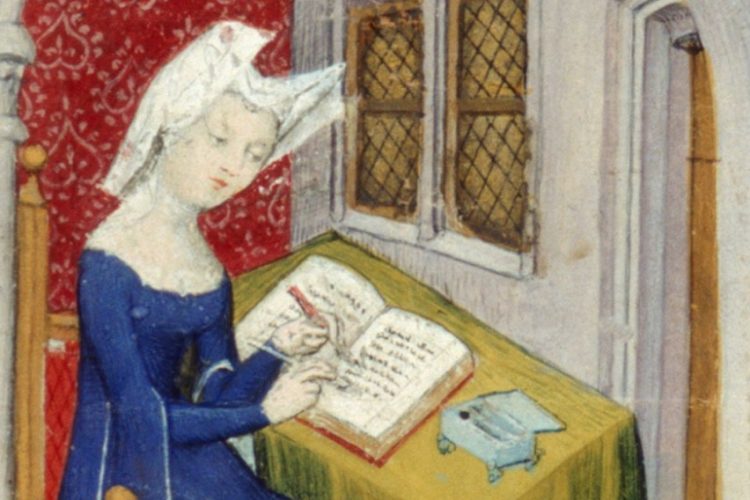
<p>Christine de Pizan, born in 1364 and deceased around 1430, was one of the first women to earn a living through her writing. She advocated for women&#8217;s rights and defended their intellectual and moral abilities in her works, particularly The Book of the City of Ladies.</p>
<p><img loading="lazy" decoding="async" class="alignnone size-full wp-image-9923" src="https://europescastles.com/wp-content/uploads/2024/09/Christine-de-Pizan.jpg" alt="Christine de Pizan" width="852" height="601" srcset="https://europescastles.com/wp-content/uploads/2024/09/Christine-de-Pizan.jpg 852w, https://europescastles.com/wp-content/uploads/2024/09/Christine-de-Pizan-300x212.jpg 300w, https://europescastles.com/wp-content/uploads/2024/09/Christine-de-Pizan-768x542.jpg 768w" sizes="(max-width: 852px) 100vw, 852px" /></p>
<p>Louvre Castle in Paris, originally a medieval fortress, served as the setting for much of Christine’s work. She lived in the French court during this time. Although today known as a museum, the Louvre was a residence of kings and a center of intellectual activity during Christine&#8217;s life.</p>
<p>&nbsp;</p>
<h2>Joan of Arc (1412 – 1431): The warrior who defended castles</h2>
<p>Joan of Arc, born in 1412 and executed in 1431, remains one of the most iconic figures in French history. Her military campaigns, particularly during the Hundred Years&#8217; War, were crucial in recapturing castles and fortresses from English control.</p>
<p><img loading="lazy" decoding="async" class="alignnone size-full wp-image-9924" src="https://europescastles.com/wp-content/uploads/2024/09/Joan-of-Arc.jpg" alt="Joan of Arc" width="720" height="405" srcset="https://europescastles.com/wp-content/uploads/2024/09/Joan-of-Arc.jpg 720w, https://europescastles.com/wp-content/uploads/2024/09/Joan-of-Arc-300x169.jpg 300w" sizes="(max-width: 720px) 100vw, 720px" /></p>
<p>Château de Chinon is again significant here. It was at this castle that Joan met with Charles VII, persuading him to let her lead his army. This castle played a pivotal role in Joan’s story and in the history of France.</p>
<p>&nbsp;</p>
<h2>Julian of Norwich (1342 – after 1416): A visionary from the shadows of castles</h2>
<p>Julian of Norwich, born in 1342 and deceased sometime after 1416, was a mystic and theologian whose spiritual writings influenced religious thought throughout medieval Europe. While not directly associated with castles, her visions were read by many nobles and clergy who lived within them.</p>
<p><img loading="lazy" decoding="async" class="alignnone size-full wp-image-9925" src="https://europescastles.com/wp-content/uploads/2024/09/Julian-of-Norwich.jpg" alt="Julian of Norwich" width="920" height="656" srcset="https://europescastles.com/wp-content/uploads/2024/09/Julian-of-Norwich.jpg 920w, https://europescastles.com/wp-content/uploads/2024/09/Julian-of-Norwich-300x214.jpg 300w, https://europescastles.com/wp-content/uploads/2024/09/Julian-of-Norwich-768x548.jpg 768w" sizes="(max-width: 920px) 100vw, 920px" /></p>
<p>Norwich Castle, located in Julian’s home city, symbolizes the close relationship between religious mysticism and the power structures of the Middle Ages. The castle dominated the cityscape, providing both military defense and a center of governance.</p>
<p>&nbsp;</p>
<h2>Margery Kempe (c. 1373 – after 1438): A spiritual pilgrim in the world of castles</h2>
<p>Margery Kempe, born around 1373 and alive after 1438, was another mystic. She chronicled her spiritual journeys in <em>The Book of Margery Kempe</em>, considered one of the earliest autobiographies in English. Her religious fervor brought her into contact with the noble classes and clergy, many of whom resided in castles.</p>
<p><img loading="lazy" decoding="async" class="alignnone size-full wp-image-9926" src="https://europescastles.com/wp-content/uploads/2024/09/Margery-Kempe.webp" alt="Margery Kempe" width="768" height="586" srcset="https://europescastles.com/wp-content/uploads/2024/09/Margery-Kempe.webp 768w, https://europescastles.com/wp-content/uploads/2024/09/Margery-Kempe-300x229.webp 300w" sizes="(max-width: 768px) 100vw, 768px" /></p>
<p>King’s Lynn Castle in Norfolk, England, where Margery lived, was an important medieval stronghold. It stood as a backdrop to her life as she navigated the religious and social landscapes of the time.</p>
<h2>Castles as witnesses to female power</h2>
<p>They twelve famous women of the Middle Agesnot only shaped the history of their time. They also left their marks on the castles and fortresses that dominated the medieval landscape. From Empress Theodora’s reign in Byzantium to Joan of Arc’s defense of French fortresses, each woman contributed in unique ways to the evolution of Europe’s castles. These structures, whether military strongholds, religious sanctuaries, or centers of courtly life, bear witness to the complex and multifaceted roles women played during the medieval period. Their stories remain intertwined with the architectural heritage of Europe&#8217;s castles, inspiring both scholars and visitors to this day.</p>
<p>The post <a href="https://europescastles.com/famous-persons/twelve-famous-women-of-the-middle-ages/">Twelve famous women of the Middle Ages</a> appeared first on <a href="https://europescastles.com">Europe&#039;s Castles</a>.</p>
]]></content:encoded>
					
					<wfw:commentRss>https://europescastles.com/famous-persons/twelve-famous-women-of-the-middle-ages/feed/</wfw:commentRss>
			<slash:comments>0</slash:comments>
		
		
			</item>
		<item>
		<title>William Wallace: Exploring his castle connections</title>
		<link>https://europescastles.com/history/william-wallace-exploring-his-castle-connections/</link>
					<comments>https://europescastles.com/history/william-wallace-exploring-his-castle-connections/#respond</comments>
		
		<dc:creator><![CDATA[europescastles]]></dc:creator>
		<pubDate>Mon, 29 Jul 2024 19:24:27 +0000</pubDate>
				<category><![CDATA[Famous persons]]></category>
		<category><![CDATA[History]]></category>
		<category><![CDATA[william wallace]]></category>
		<guid isPermaLink="false">https://europescastles.com/?p=9762</guid>

					<description><![CDATA[<p>The castles of Europe are renowned for their historical significance and architectural splendor. They stand as enduring symbols of the continent&#8217;s rich and tumultuous past. Among the many historical figures associated with these majestic structures, William Wallace, a Scottish knight and national hero, holds a prominent place. This blog will explore the castles connected to [&#8230;]</p>
<p>The post <a href="https://europescastles.com/history/william-wallace-exploring-his-castle-connections/">William Wallace: Exploring his castle connections</a> appeared first on <a href="https://europescastles.com">Europe&#039;s Castles</a>.</p>
]]></description>
										<content:encoded><![CDATA[<p>The castles of Europe are renowned for their historical significance and architectural splendor. They stand as enduring symbols of the continent&#8217;s rich and tumultuous past. Among the many historical figures associated with these majestic structures, William Wallace, a Scottish knight and national hero, holds a prominent place. This blog will explore the castles connected to William Wallace, shedding light on their historical importance and the enduring legacy of this legendary figure.</p>
<h2>The historical context of William Wallace</h2>
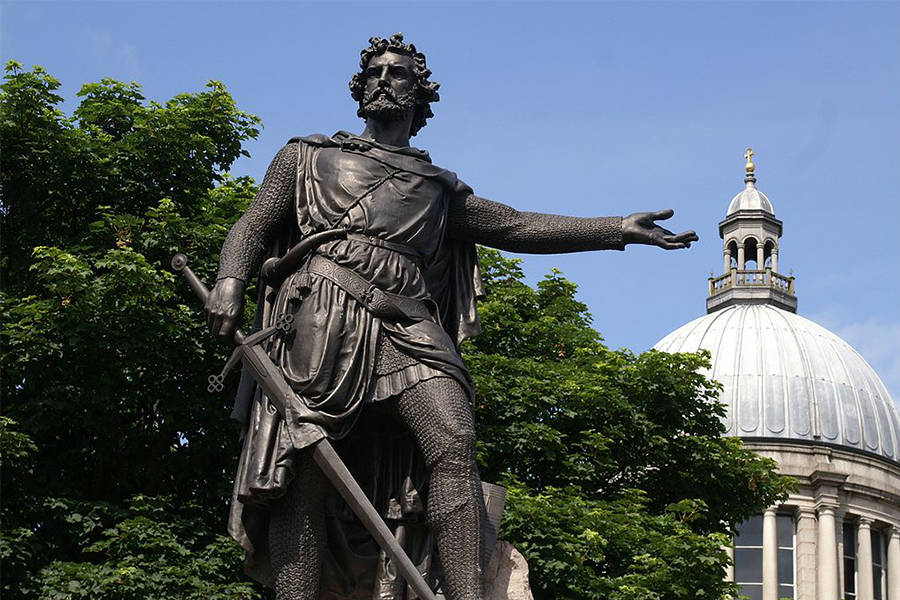
<p>William Wallace, a key figure in the First War of Scottish Independence, is celebrated for his unwavering dedication to Scotland&#8217;s freedom. Born in the late 13th century, Wallace led a resistance against English occupation, inspiring countless others with his bravery and strategic acumen. While Wallace&#8217;s exploits are often associated with battlefields, several castles across Scotland played crucial roles in his campaign and life.</p>
<h2>Stirling Castle: The site of Wallace&#8217;s triumph</h2>
<p><a href="https://europescastles.com/castle/stirling-castle/">Stirling Castle</a>, one of Scotland&#8217;s most significant fortresses, is intimately linked with William Wallace. The Battle of Stirling Bridge in 1297 marked a turning point in the Scottish struggle for independence. Under Wallace&#8217;s leadership, the Scots achieved a decisive victory against a superior English force. This triumph was not merely a military success but also a powerful symbol of Scottish resilience and determination.</p>
<p>The castle itself, perched on a volcanic rock, offers stunning views of the surrounding landscape. Its strategic location made it a key stronghold in medieval Scotland. Visitors to Stirling Castle can explore the Great Hall, the Royal Palace, and the Chapel Royal, all of which have witnessed centuries of history. The site serves as a reminder of Wallace&#8217;s legacy and the enduring spirit of the Scottish people.</p>
<p><img loading="lazy" decoding="async" class="alignnone size-full wp-image-9777" src="https://europescastles.com/wp-content/uploads/2024/07/stirling-castle-1.jpg" alt="Stirling castle" width="1041" height="682" srcset="https://europescastles.com/wp-content/uploads/2024/07/stirling-castle-1.jpg 1041w, https://europescastles.com/wp-content/uploads/2024/07/stirling-castle-1-300x197.jpg 300w, https://europescastles.com/wp-content/uploads/2024/07/stirling-castle-1-1024x671.jpg 1024w, https://europescastles.com/wp-content/uploads/2024/07/stirling-castle-1-768x503.jpg 768w" sizes="(max-width: 1041px) 100vw, 1041px" /></p>
<h2>Edinburgh Castle: A fortress of historical significance</h2>
<p><a href="https://europescastles.com/castle/edinburgh-castle/">Edinburgh Castle</a>, another iconic Scottish stronghold, has connections to William Wallace. Although not directly associated with his battles, the castle played a vital role in the broader context of the Wars of Scottish Independence. Following Wallace&#8217;s victory at Stirling Bridge, Edinburgh Castle became a focal point in the ongoing conflict between Scotland and England.</p>
<p>The castle, situated atop Castle Rock, has been a royal residence, military stronghold, and symbol of Scottish heritage for centuries. Its formidable defenses and strategic importance made it a coveted prize for both Scottish and English forces. Furthermore, today, Edinburgh Castle houses the Crown Jewels of Scotland and the Stone of Destiny, further cementing its status as a symbol of national pride.</p>
<p><img loading="lazy" decoding="async" class="alignnone size-full wp-image-9214" src="https://europescastles.com/wp-content/uploads/2021/11/Edinburgh-Castle.jpg" alt="Edinburgh Castle" width="798" height="449" srcset="https://europescastles.com/wp-content/uploads/2021/11/Edinburgh-Castle.jpg 798w, https://europescastles.com/wp-content/uploads/2021/11/Edinburgh-Castle-300x169.jpg 300w, https://europescastles.com/wp-content/uploads/2021/11/Edinburgh-Castle-768x432.jpg 768w" sizes="(max-width: 798px) 100vw, 798px" /></p>
<h2>Lanark Castle: The site of Wallace&#8217;s early rebellion</h2>
<p>Lanark Castle, though now in ruins, holds a significant place in the story of William Wallace. It was here, in 1297, that Wallace first rose to prominence by killing the English sheriff, William de Heselrig, in a daring act of defiance. This bold move marked the beginning of Wallace&#8217;s campaign against English rule and set the stage for his later successes.</p>
<p>While the castle itself no longer stands, the town of Lanark commemorates Wallace&#8217;s legacy with statues and monuments. Visitors can explore the remains of the ancient structure and imagine the events that unfolded there over seven centuries ago. The story of Lanark Castle serves as a testament to Wallace&#8217;s courage and the enduring struggle for Scottish independence.</p>
<p><img loading="lazy" decoding="async" class="alignnone size-full wp-image-9766" src="https://europescastles.com/wp-content/uploads/2024/07/lanark-castle.jpg" alt="lanark castle" width="1072" height="718" srcset="https://europescastles.com/wp-content/uploads/2024/07/lanark-castle.jpg 1072w, https://europescastles.com/wp-content/uploads/2024/07/lanark-castle-300x201.jpg 300w, https://europescastles.com/wp-content/uploads/2024/07/lanark-castle-1024x686.jpg 1024w, https://europescastles.com/wp-content/uploads/2024/07/lanark-castle-768x514.jpg 768w, https://europescastles.com/wp-content/uploads/2024/07/lanark-castle-360x240.jpg 360w" sizes="(max-width: 1072px) 100vw, 1072px" /></p>
<h2>Rothesay Castle: A refuge for Wallace&#8217;s allies</h2>
<p><a href="https://europescastles.com/castle/rothesay-castle/">Rothesay Castle</a>, located on the Isle of Bute, played a role in the turbulent times of William Wallace. While not directly linked to Wallace himself, the castle served as a refuge for his allies and supporters during the Wars of Scottish Independence. Its strategic location and formidable defenses made it an ideal stronghold for those fighting against English domination.</p>
<p>Today, Rothesay Castle stands as a picturesque ruin, offering visitors a glimpse into Scotland&#8217;s medieval past. The castle&#8217;s circular design and imposing walls reflect the architectural innovations of the time. As you explore the site, the connections to Wallace&#8217;s era become apparent, highlighting the interconnected nature of Scotland&#8217;s historical landscape.</p>
<p><img loading="lazy" decoding="async" class="alignnone size-full wp-image-9771" src="https://europescastles.com/wp-content/uploads/2024/07/Rothesay-Castle-3.jpg" alt="Rothesay Castle" width="1000" height="580" srcset="https://europescastles.com/wp-content/uploads/2024/07/Rothesay-Castle-3.jpg 1000w, https://europescastles.com/wp-content/uploads/2024/07/Rothesay-Castle-3-300x174.jpg 300w, https://europescastles.com/wp-content/uploads/2024/07/Rothesay-Castle-3-768x445.jpg 768w" sizes="(max-width: 1000px) 100vw, 1000px" /></p>
<h2>William Wallace his enduring legacy</h2>
<p>The castles associated with William Wallace provide a tangible link to Scotland&#8217;s storied past. Each fortress tells a part of the larger narrative of the country&#8217;s struggle for independence and the indomitable spirit of its people. Wallace&#8217;s legacy, immortalized in these stone structures, continues to inspire and captivate visitors from around the world.</p>
<p>As you explore these castles, the importance of preserving and understanding this heritage becomes clear. Additionally, the story of William Wallace and the castles connected to his life serve as powerful reminders of the enduring quest for freedom and justice. Moreover, by visiting these historic sites, one gains a deeper appreciation for the sacrifices made and the resilience demonstrated by those who fought for Scotland&#8217;s independence.</p>
<p><img loading="lazy" decoding="async" class="alignnone size-full wp-image-9780" src="https://europescastles.com/wp-content/uploads/2024/07/William-Wallace.webp" alt="William Wallace" width="1600" height="1067" srcset="https://europescastles.com/wp-content/uploads/2024/07/William-Wallace.webp 1600w, https://europescastles.com/wp-content/uploads/2024/07/William-Wallace-300x200.webp 300w, https://europescastles.com/wp-content/uploads/2024/07/William-Wallace-1024x683.webp 1024w, https://europescastles.com/wp-content/uploads/2024/07/William-Wallace-768x512.webp 768w, https://europescastles.com/wp-content/uploads/2024/07/William-Wallace-1536x1024.webp 1536w, https://europescastles.com/wp-content/uploads/2024/07/William-Wallace-360x240.webp 360w, https://europescastles.com/wp-content/uploads/2024/07/William-Wallace-720x480.webp 720w, https://europescastles.com/wp-content/uploads/2024/07/William-Wallace-750x500.webp 750w" sizes="(max-width: 1600px) 100vw, 1600px" /></p>
<h2>Closing remarks about William Wallace</h2>
<p>The castles of Europe, with their rich histories and architectural grandeur, offer a window into the past. Furthermore, the legacy of William Wallace, intertwined with these fortresses, provides a compelling narrative of courage, resistance, and national pride. By exploring the castles associated with Wallace, you embark on a journey through time. Consequently, you discover the profound impact of this legendary figure on Scotland&#8217;s history. Stand atop the battlements of Stirling Castle or wander the ruins of Lanark Castle. The spirit of William Wallace and the significance of his legacy can be felt. Ultimately, this reminds us all of the enduring power of history and heritage.</p>
<p>The post <a href="https://europescastles.com/history/william-wallace-exploring-his-castle-connections/">William Wallace: Exploring his castle connections</a> appeared first on <a href="https://europescastles.com">Europe&#039;s Castles</a>.</p>
]]></content:encoded>
					
					<wfw:commentRss>https://europescastles.com/history/william-wallace-exploring-his-castle-connections/feed/</wfw:commentRss>
			<slash:comments>0</slash:comments>
		
		
			</item>
		<item>
		<title>William the Conqueror: The Architectural Legacy</title>
		<link>https://europescastles.com/history/william-the-conqueror-the-architectural-legacy/</link>
					<comments>https://europescastles.com/history/william-the-conqueror-the-architectural-legacy/#respond</comments>
		
		<dc:creator><![CDATA[europescastles]]></dc:creator>
		<pubDate>Fri, 05 Jul 2024 20:09:32 +0000</pubDate>
				<category><![CDATA[Famous persons]]></category>
		<category><![CDATA[History]]></category>
		<category><![CDATA[William the Conqueror]]></category>
		<guid isPermaLink="false">https://europescastles.com/?p=9540</guid>

					<description><![CDATA[<p>Europe&#8217;s castles have long stood as symbols of history, culture, and power. Among the most notable figures associated with these magnificent structures is William the Conqueror. His influence is indelibly etched into the architectural and historical landscape of Europe. By exploring the castles connected to William the Conqueror, a richer understanding of his legacy and [&#8230;]</p>
<p>The post <a href="https://europescastles.com/history/william-the-conqueror-the-architectural-legacy/">William the Conqueror: The Architectural Legacy</a> appeared first on <a href="https://europescastles.com">Europe&#039;s Castles</a>.</p>
]]></description>
										<content:encoded><![CDATA[<p>Europe&#8217;s castles have long stood as symbols of history, culture, and power. Among the most notable figures associated with these magnificent structures is William the Conqueror. His influence is indelibly etched into the architectural and historical landscape of Europe. By exploring the castles connected to William the Conqueror, a richer understanding of his legacy and impact on European history can be gained.</p>
<h2>The Historical Significance of William the Conqueror</h2>
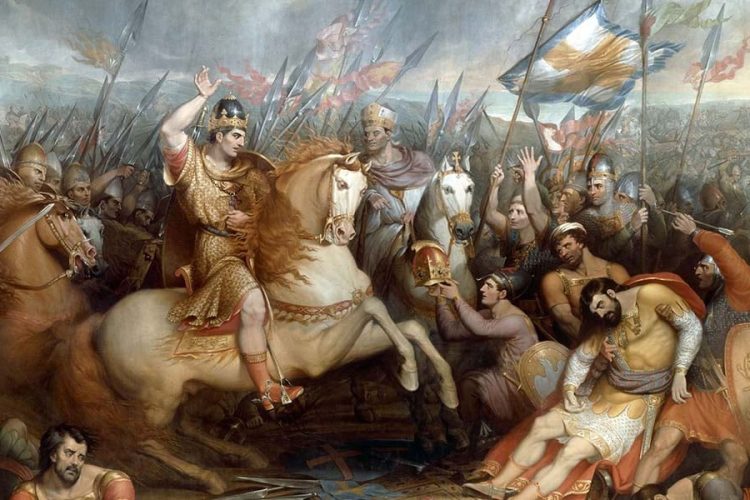
<p>William the Conqueror, also known as William I of England, was a pivotal figure in European history. Born in 1028 in Falaise, Normandy, his ascent to power culminated in the Norman Conquest of England in 1066. This event fundamentally altered the course of English history and left a lasting imprint on European medieval architecture and governance. The castles commissioned by William the Conqueror were not merely military fortifications but also symbols of Norman authority and cultural integration.</p>
<h2>Key Castles Built by William the Conqueror</h2>
<p>Several castles built during William the Conqueror&#8217;s reign stand today as testaments to his strategic and architectural prowess. Among these, <a href="https://europescastles.com/castle/tower-of-london/">the Tower of London</a> is perhaps the most iconic. Initially constructed as a means of asserting Norman dominance over the newly conquered English territory, the Tower of London has evolved over the centuries into a multifaceted symbol of British history. Its White Tower, the central keep, is a quintessential example of Norman military architecture.</p>
<p>Another significant castle associated with William the Conqueror is <a href="https://europescastles.com/castle/windsor-castle/">Windsor Castle</a>. Founded by William shortly after the Norman Conquest, Windsor Castle has served as a royal residence for over 900 years. Its enduring significance is highlighted by its continuous use and adaptation over the centuries. This reflects the changing needs and tastes of successive monarchs while retaining its foundational Norman elements.</p>
<p><img loading="lazy" decoding="async" class="alignnone size-full wp-image-9541" src="https://europescastles.com/wp-content/uploads/2024/07/tower-of-london-2.jpg" alt="" width="800" height="600" srcset="https://europescastles.com/wp-content/uploads/2024/07/tower-of-london-2.jpg 800w, https://europescastles.com/wp-content/uploads/2024/07/tower-of-london-2-300x225.jpg 300w, https://europescastles.com/wp-content/uploads/2024/07/tower-of-london-2-768x576.jpg 768w" sizes="(max-width: 800px) 100vw, 800px" /></p>
<h2>Architectural Features of William the Conqueror&#8217;s Castles</h2>
<p>The castles commissioned by William the Conqueror exhibit distinct architectural features that reflect the Norman style. Key characteristics include massive stone keeps, which served both defensive and residential purposes. The use of motte-and-bailey structures was also prevalent, where a wooden or stone keep was situated on a raised earthwork called a motte, accompanied by an enclosed courtyard, or bailey. These features were designed to provide formidable defense against potential sieges and to symbolize Norman authority.</p>
<p>The emphasis on strong defensive mechanisms, such as thick walls, narrow windows, and strategically placed towers, exemplified the military acumen of the Normans. Additionally, the integration of Romanesque elements, such as rounded arches and intricate stone carvings, showcased the cultural and artistic influences that shaped Norman architecture.</p>
<h2>William the Conqueror&#8217;s Influence on European Castles</h2>
<p>The impact of William the Conqueror on castle construction extended beyond England. It influenced Normandy&#8217;s architectural landscape and other parts of Europe. The castles in Normandy, such as <a href="https://europescastles.com/castle/chateau-de-falaise/">Château de Falaise</a>, offer insights. This was where William was born. These structures provided a blueprint for post-conquest English castles. They illustrate the transference of architectural knowledge across the English Channel.</p>
<p>Furthermore, the castles built during William&#8217;s reign facilitated the consolidation of Norman control over England and contributed to the broader feudal system that defined medieval Europe. By establishing a network of strategically located castles, William the Conqueror ensured effective governance and defense of his territories. This system of fortifications enabled the Normans to maintain their hold on England and exert influence over surrounding regions.</p>
<p><img loading="lazy" decoding="async" class="alignnone size-full wp-image-9560" src="https://europescastles.com/wp-content/uploads/2024/07/Chateau-de-Falaise-1.jpg" alt="" width="1001" height="605" srcset="https://europescastles.com/wp-content/uploads/2024/07/Chateau-de-Falaise-1.jpg 1001w, https://europescastles.com/wp-content/uploads/2024/07/Chateau-de-Falaise-1-300x181.jpg 300w, https://europescastles.com/wp-content/uploads/2024/07/Chateau-de-Falaise-1-768x464.jpg 768w" sizes="(max-width: 1001px) 100vw, 1001px" /></p>
<h2>Preservation and Legacy of William the Conqueror&#8217;s Castles</h2>
<p>Today, historians and preservationists preserve the castles associated with William the Conqueror as historical monuments and cultural heritage sites. They undertake efforts to maintain and restore these structures to ensure their continued relevance and accessibility to the public. The Tower of London and <a href="https://europescastles.com/castle/windsor-castle/">Windsor Castle</a>, in particular, attract millions of visitors annually, serving as educational resources and symbols of national pride.</p>
<p>The preservation of these castles allows contemporary audiences to appreciate the architectural ingenuity. It also highlights the historical significance of William the Conqueror&#8217;s reign. Through guided tours, exhibitions, and educational programs, visitors can gain a deeper understanding of the medieval period. They can also learn about the transformative impact of the Norman Conquest.</p>
<p><img loading="lazy" decoding="async" class="alignnone size-full wp-image-9543" src="https://europescastles.com/wp-content/uploads/2024/07/William-the-Conqueror-2.jpg" alt="" width="1000" height="525" srcset="https://europescastles.com/wp-content/uploads/2024/07/William-the-Conqueror-2.jpg 1000w, https://europescastles.com/wp-content/uploads/2024/07/William-the-Conqueror-2-300x158.jpg 300w, https://europescastles.com/wp-content/uploads/2024/07/William-the-Conqueror-2-768x403.jpg 768w" sizes="(max-width: 1000px) 100vw, 1000px" /></p>
<h2>Final thoughts</h2>
<p>In exploring the castles associated with William the Conqueror, a comprehensive picture of his legacy and influence on European history emerges. The architectural features and strategic locations of these castles reflect the Norman approach to governance and military defense. By preserving and studying these structures, a greater appreciation for the historical and cultural contributions of William the Conqueror can be achieved. Europe&#8217;s castles, therefore, serve as enduring reminders of a pivotal era in history and the enduring legacy of one of its most influential figures.</p>
<p>The post <a href="https://europescastles.com/history/william-the-conqueror-the-architectural-legacy/">William the Conqueror: The Architectural Legacy</a> appeared first on <a href="https://europescastles.com">Europe&#039;s Castles</a>.</p>
]]></content:encoded>
					
					<wfw:commentRss>https://europescastles.com/history/william-the-conqueror-the-architectural-legacy/feed/</wfw:commentRss>
			<slash:comments>0</slash:comments>
		
		
			</item>
	</channel>
</rss>